


-
 Organizer
:
National Taiwan Museum
Organizer
:
National Taiwan Museum
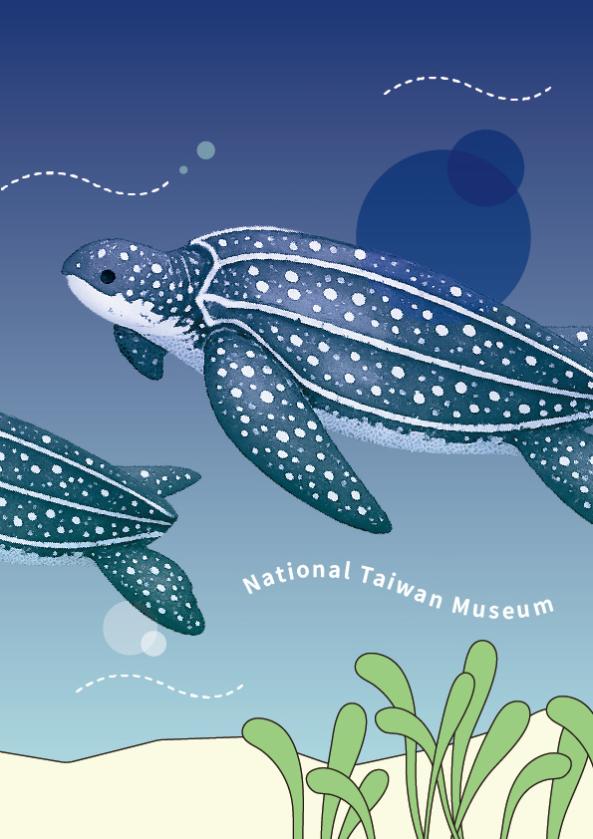
Leatherback Sea Turtle (Dermochelys coriacea)
The Leatherback sea turtle, also known as the lute turtle, is scientifically named Dermochelys coriacea. Unlike other sea turtles, leatherback sea turtles do not have a hard, horny carapace. Instead, they have many thin bony plate that is only 1-2 millimeters thick and covered by a layer of skin, hence their name. The body is dark gray and covered with white spots. The body length of 2.5 meters, though some individuals can reach up to 3 meters. Renowned for their exceptional swimming and diving abilities, leatherback sea turtles primarily feed on jellyfish and plankton. They spend the vast majority of their lives migrating across the open ocean, with females only returning to shore to lay eggs. While they are widely distributed across tropical, subtropical, and temperate waters worldwide, Taiwan is not a nesting site for this species; sightings and strandings in the region are rare.
This particular Leatherback sea turtle was found stranded on a beach in the Gongliao District by the Coast Guard Administration in April 2023. Upon inspection by the Taiwan Cetacean Society, it was confirmed to have no signs of life. Following this discovery, the Museum coordinated with the New Taipei City Government Animal Protection and Health Inspection Association to acquire the specimen. We then commissioned Professor Wei-Lien Chi from Asia University to create a professional skeleton specimen.


